


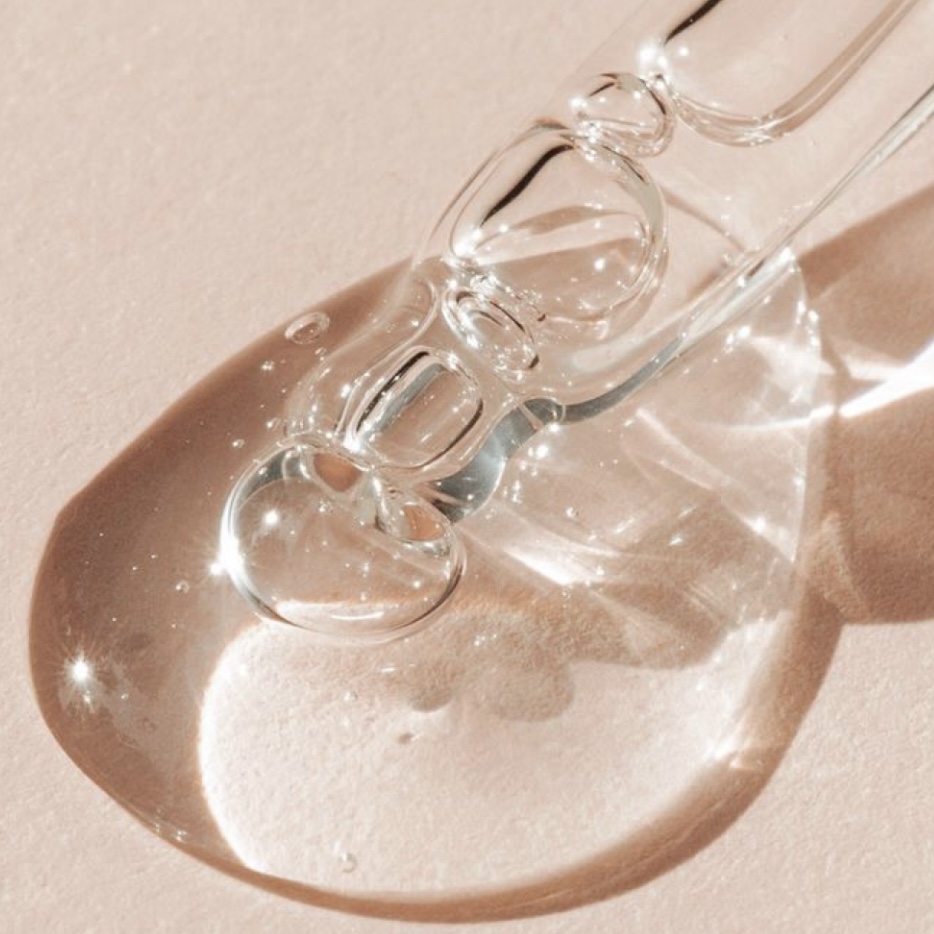
This molecule even appears in shampoo, Is everything they tell us about her true??
Of all the cosmetic ingredients, I think hyaluronic acid is the best known or famous. There are many advertisements that tell us about this ingredient and we have almost sanctified it when it comes to treating premature aging..
Today I would like you to know a little more about this wonderful molecule, so that you can become aware of which of its forms is the most appropriate for you or for what you want it to give you., and we are going to do it by demolishing 3 myths created around this ingredient.
What is hyaluronic acid?
Hyaluronic acid is a liquid substance, a type of sugar, which is part of the collagen that is produced within our body. around him, have been built 3 myths that we are going to dismantle:
- MITO 1: Hyaluronic acid is of artificial origin.
Hyaluronic acid is found naturally in our body, in numerous tissues and organs of the human body: epidermis, connective tissue, cartilage, synovial fluid, eyes...etc.
One of its important properties is to be able to attract and retain water., keeping these tissues in good condition.
Hyaluronic acid is capable of retaining 1000 times its weight in water and is capable of containing a total of about 15 kg of water in the body.
Hyaluronic acid obtained from animal origin can be purchased on the market or hyaluronic acid can be obtained synthetically manufactured in laboratories.. The latter is what is known as vegan hyaluronic acid.. Their shapes are the same and their effectiveness is the same.
When to use hyaluronic acid?
- MITO 2: If I don't have wrinkles, why do I need it?
During the natural aging process, The amount of hyaluronic acid progressively decreases in the body, causing it to lose juiciness., elasticity and firmness. As a curious fact, it should be noted, that at the age of 50 years, has been lost 50% of the amount of hyaluronic acid present in the body. This phenomenon causes the skin to appear dehydrated or the cartilage to become more rigid..
An extra contribution of this substance, can help us improve our appearance and our quality of life.
How to take hyaluronic acid?
- MITO 3: It only works if it is injected.
Many doubts arise in its use, since we see that it is a product that can be used in many ways: It can be part of creams or serums, can be injected directly into the skin or can be taken as a food supplement.
When it is part of creams or serums it can perform different functions., since we can find different types of hyaluronic acid with different molecular weights.
Low molecular weight hyaluronic acid is a shorter type of molecule, whose size allows it to penetrate into the inner layers of the skin, replenishing the internal water that is eliminated by transepidermal loss..
However, when the hyaluronic acid we have is of high molecular weight, This would remain in the outer layers of the skin, helping to maintain its hydration., repairing the barrier function and helping to retain water that is lost through transepidermal loss.
The ideal is to use a product that contains the type of hyaluronic acid that best suits the needs of your skin..
When hyaluronic acid is injected, What we do is fill localized areas where dehydration has left a greater mark. It is used to fill wrinkles and expression marks., in addition to being used to improve lubrication in joints.
If what we decide is ingest hyaluronic acid in the form of a food supplement, We are providing this ingredient to the area of the body where it is most needed.. It helps improve expression marks on the face but also improves the general appearance of the skin since it is distributed throughout the body.. It has also been shown to have intestinal and joint benefits.. Not all forms of ingestible hyaluronic acid are equally effective. Its effect is enhanced if we combine it with antioxidants.
Among all, I stay with ANTIOX N5, since its formula is very complete. Hyaluronic acid is in the most stable form to be ingested, in addition to being presented in combination with very powerful antioxidants.
Whatever your chosen way to incorporate hyaluronic acid, It is very important that you are clear about how you want your results to be reflected and what needs your body has..
PD: By the way, that I almost forgot.
It seems to be fashionable to use the same language for skin as for hair and this can cause confusion because hair has different needs and characteristics than skin..
Moisturizing hair is a concept that leads us to confusion and in part, It is the advertising industry that has us in a mess.. They make us imagine that hydrated hair is shiny hair, healthy and strong, with zero frizz. Beyond reality, I would like you to know that the time when hair is most fragile is when it is wet..
So ending this post as we started it., Do you think it makes sense to use a shampoo with hyaluronic acid to hydrate your hair?? For me it doesn't have it.
Hyaluronic acid in a shampoo could generate benefits at the scalp level but not at all on the hair fiber. To improve the appearance of the hair we already have other nutritional components that according to the specific needs of each type of hair, They can improve it to a greater or lesser extent..
I would like to know what you think about it. I'm all ears.