


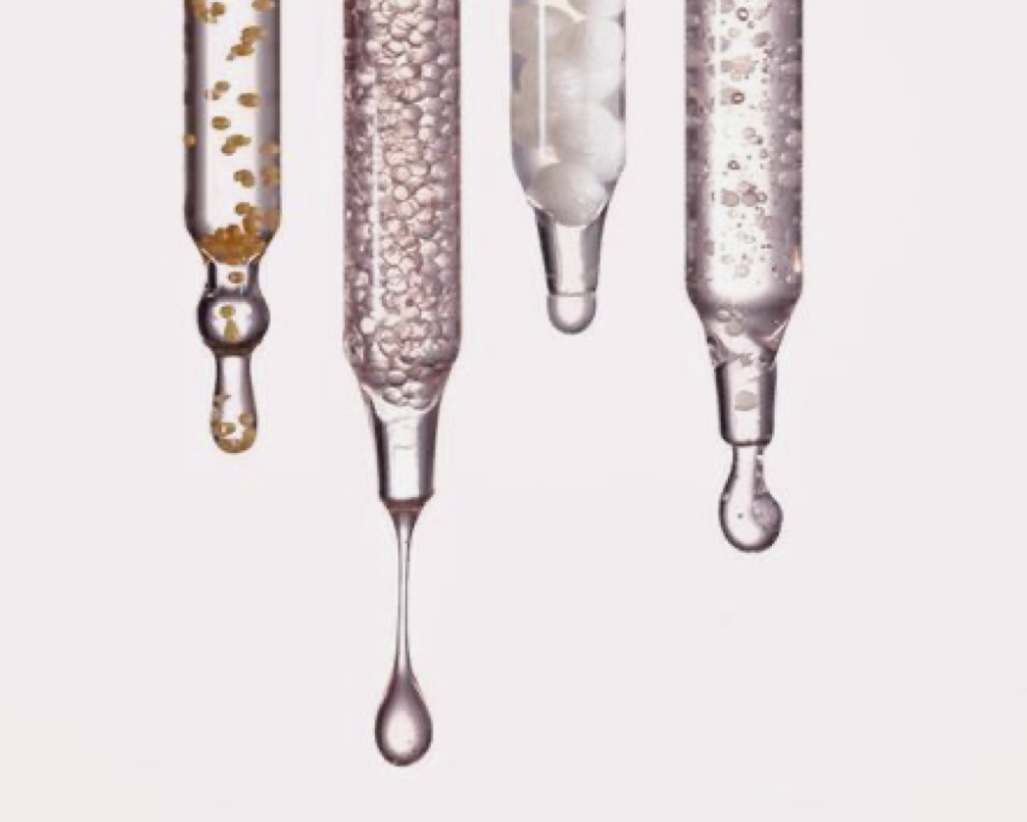
All skin experts agree that if you want to improve the appearance of your skin, you have to resort to retinol.
Retinol is one of the cosmetic forms that vitamin A acquires, although it is not the only one.
It is an active ingredient that improves skin texture, reduces expression marks and blemishes, Helps control oil and consequently fights acne.
The action that promises is that of a powerful exfoliant that helps regenerate the skin, in addition to promoting the production of collagen and hyaluronic acid, which leads to improving the elasticity and juiciness of the skin.
But, Is retinol suitable for all skin types?
Retinol can be used on almost all skin types since we can find it in different concentrations. Even so, The ideal is that you advise a specialist to help you choose the most appropriate type of retinol for the state of your skin.
What side effects does it have??
It is an ingredient that the skin “has to get used to”, so we can increase concentration little by little to obtain the best results. How we refer to this process in cosmetic jargon, “the skin has to be retinised”.
Can retinol always be used?
Retinol has a number of restrictions:
- It is contraindicated in pregnant and lactating women because it can cause malformations in the fetus..
- It is contraindicated to use it at times when you are going to expose your skin to the sun., so it is usually indicated in nighttime routines.
- Its use is not highly recommended on skin with pathologies such as rosacea or eczema., due to its low tolerance to exfoliating ingredients. This is not a contraindication since retinized skin can use it.. Even so, I recommend that if you have any pathology, your retinol treatment is supervised by a specialist or dermatologist.
- Take care of the skin around the eyes. This skin is extremely sensitive and can be much more affected by the action of exfoliants than the rest of the facial skin..
Speaking of restrictions, there is a false myth about retinol and it is said that its use is restricted in summer.
Retinol can be used in summer, always at night as usual and in the day routine you cannot miss a sunscreen with very high and broad spectrum SPF.
I recommend that if you are going to start using retinol, Wait until the summer season passes to prevent your skin from becoming irritated and overexposed to solar radiation.. In this way we will prevent the skin from burning more easily and favoring the appearance of sun spots..
Are there alternatives to retinol?
Within the group of retinoids, There are other active forms of vitamin A.
One of the best known is the retinal o retinaldehido. It is one of the new generation molecules and version of retinol for sensitive skin., thanks to its formulation using encapsulation techniques.
Retinal provides visible effects with shorter use time than retinol. It is ideal for mature skin that wants to see quick effects.
Retinal is the only retinoid that has antibacterial effects, Therefore, it significantly improves acne, causing the bacteria responsible for it to decrease..
How can I decide if I choose retinol or retinal?
Between choosing retinol and retinal, It depends on the condition of your skin and the results you want from it..
Retinol has been used since ancient Egypt and retinal, due to its low stability and difficult formulation, Its use has only recently become widespread in cosmetics.. In this way, If we want to know what evolution we will achieve over the years, We cannot predict since at the moment there are no comparisons.
And there is something else...
There is a new member in the cosmetic scene and third in contention, el bakuchiol. They call it “plant retinol”. Generates benefits similar to retinol on the skin but with the advantage that it is suitable for sensitive skin. Among its features, It is suitable for vegans and is approved for use in pregnant and lactating infants..
I hope you liked this post. If you want to ask me any questions, Remember that you can book a free consultation with me HERE . I will be delighted for us to meet.